“The Irishman” is a sweeping, reflective crime epic that follows the life of Frank Sheeran, a truck driver turned hitman whose path intersects with some of the most influential figures in American organized crime. The story is told through Frank’s own recollections as an elderly man, looking back at the choices that shaped his life and the loyalties that ultimately defined—and destroyed—him. Through this intimate retrospective, the film slowly builds a portrait of a man who drifts deeper into the criminal world not through ambition, but through quiet obedience and a desire to belong.
The narrative begins with Frank’s chance encounter with Russell Bufalino, a powerful and composed mafia leader who takes Frank under his wing. Their relationship becomes the backbone of the film, a mix of mentorship, partnership, and silent manipulation. As Frank earns Russell’s trust, he becomes more deeply involved in the syndicate’s operations, carrying out hits with chilling precision and emotional detachment. The film captures this transformation not as a sudden shift, but as a gradual erosion of boundaries—and of Frank’s own moral compass.
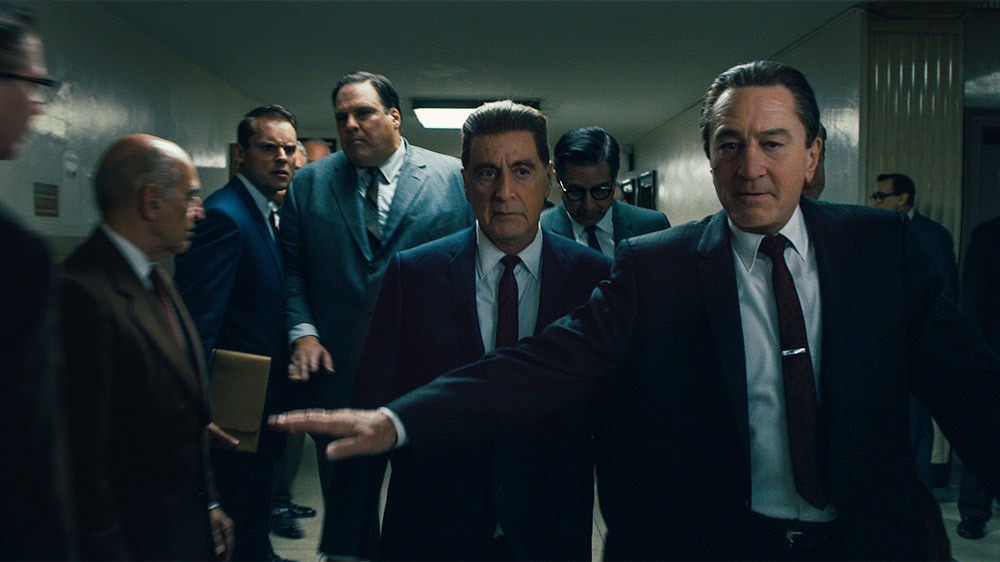
Frank’s life takes a new turn when he meets Jimmy Hoffa, the charismatic and unpredictable leader of the Teamsters union. Jimmy’s larger-than-life personality and fierce loyalty draw Frank into a friendship unlike any he has known, creating a conflict between his devotion to Hoffa and his obligations to Russell. The tension slowly builds as political pressures, personal grudges, and criminal interests collide, pushing Frank into an impossible position where loyalty to one friend means betrayal of another.
As the union struggles intensify and Hoffa’s enemies close in, the film’s emotional stakes rise. Frank becomes the silent enforcer caught between two worlds, witnessing the downfall of a man he deeply respects. When the inevitable betrayal arrives, it is portrayed not as a moment of triumph or tragedy, but as a haunting act of duty—an assignment that reveals the emptiness at the core of Frank’s violent career. The coldness of the moment lingers long after, shaping the rest of his life.

The film’s final chapters slow down to reflect the cost of Frank’s choices. His old age is marked not by glory but by loneliness, regret, and a desperate search for forgiveness that may never come. The quiet scenes in nursing homes and drab rooms contrast sharply with the chaotic world of his past, emphasizing how a lifetime of loyalty to dangerous men has left him with no one who truly knows or cares for him.
What makes “The Irishman” so powerful is its refusal to glamorize the criminal underworld. Instead, it presents aging, memory, and remorse with unflinching honesty. The violence is matter-of-fact, the relationships fragile, and the consequences unavoidable. By the time Frank’s story concludes, the film leaves us contemplating not the mythology of gangsters, but the quiet tragedy of a man who followed orders until there was nothing left of himself.
Ultimately, “The Irishman” stands as a profound and somber reflection on loyalty, guilt, and the passage of time. It is a crime saga built less on spectacle than on human frailty, offering a moving meditation on how a lifetime of choices can echo long into the final, lonely years of a man’s life.


