“The Stalingrad” (2025) revisits one of the most pivotal and devastating battles of World War II, presenting it with a scale and emotional intensity that aim to immerse the audience not just in the violence of war, but in the human cost behind it. Rather than retelling the battle strictly from a tactical perspective, the film frames Stalingrad as a brutal crucible that reshaped the lives of soldiers and civilians who found themselves trapped within its ruins. Snow-choked streets, gutted factories, and collapsing apartment blocks form a bleak, haunting backdrop that reinforces the futility of the conflict unfolding within them.
At the center of the narrative is Lieutenant Mikhail Sokolov, a young Red Army officer who begins the film with a fierce sense of duty but gradually becomes burdened by the moral compromises demanded by survival. His story intertwines with that of Anna Petrova, a former medical student who becomes a volunteer nurse after losing her family in one of the early bombings. Through their connection, the film explores the emotional tenderness that can flare up even in the darkest of environments, giving the audience a much-needed human anchor amid the relentless destruction.

The German perspective is represented through Captain Franz Adler, a seasoned Wehrmacht officer who is torn between loyalty to his men and growing disillusionment with the Nazi command. His subplot avoids simplistic villainy and instead provides a nuanced portrayal of soldiers caught in a war machine far larger than themselves. The moral parallels between Adler and Sokolov underscore the film’s central theme: that on both sides of the Volga River stood individuals who were, in different ways, victims of political ambition.
As the battle intensifies, the film employs claustrophobic cinematography to depict the chaos of close-quarters urban combat. Rubble shifts underfoot, visibility narrows to mere meters, and every corner offers the possibility of death. This relentless tension builds toward the infamous encirclement of the German Sixth Army, a sequence rendered with visceral realism. The slow starvation, dwindling ammunition, and collapsing morale convey a sense of inevitable doom that mirrors historical accounts.
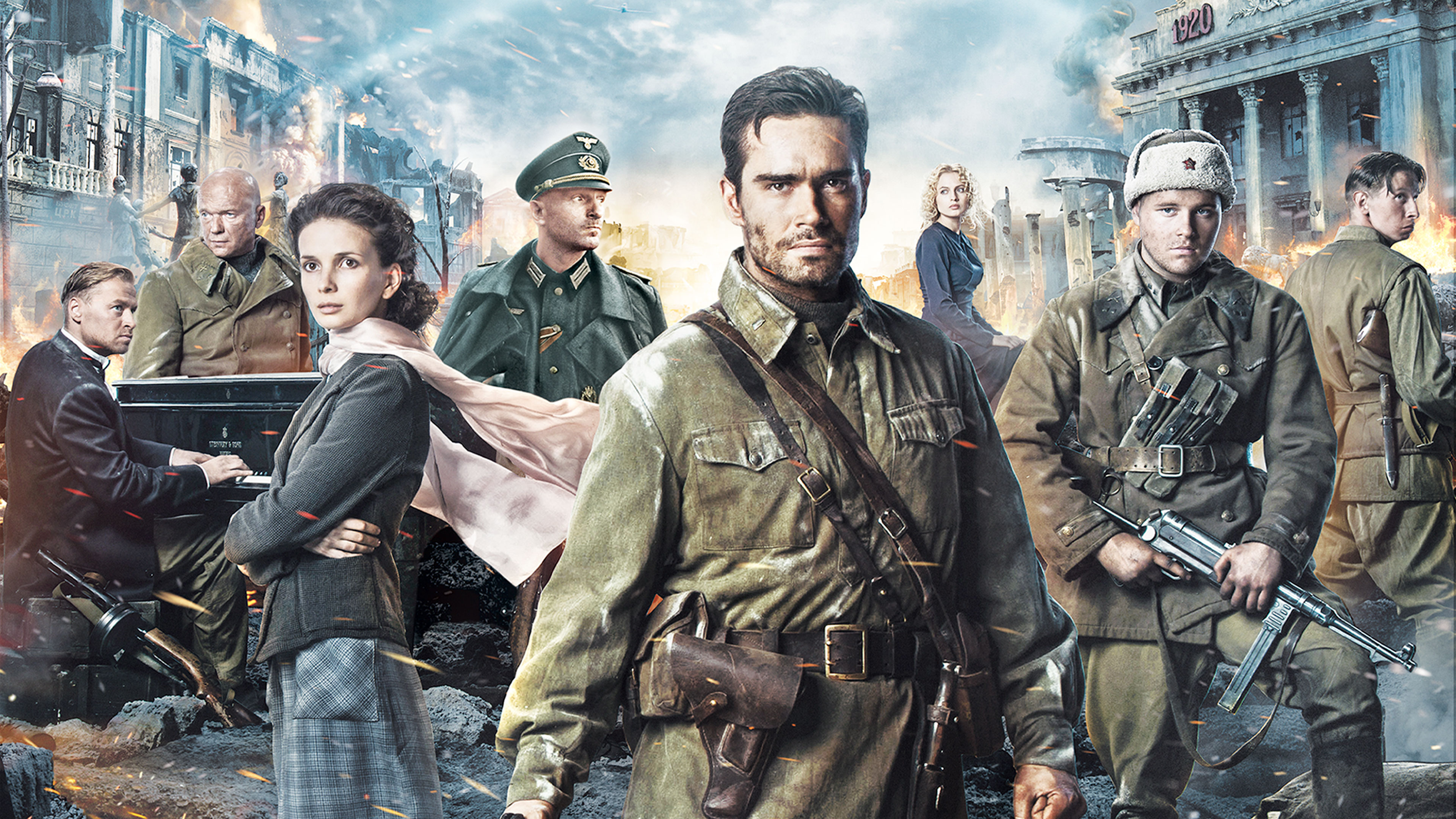
Anna’s medical station becomes a microcosm of the suffering across Stalingrad, filled with wounded soldiers, terrified civilians, and a growing sense that survival is becoming increasingly unlikely. Her moments of compassion—bandaging strangers, offering final words to dying soldiers—contrast sharply with the barbarity outside, emphasizing the film’s belief that humanity persists even where hope has nearly vanished.
The climax sees Mikhail forced into a final push to secure a strategic building, a mission that tests every belief he once held about honor and heroism. His confrontation with Adler is not a dramatic duel but a quiet, exhausted exchange that captures the absurdity and tragedy of war. When the Soviet victory finally arrives, it brings not triumph but a hollow, grief-laden silence.
“The Stalingrad” ends on a reflective note, showing the surviving characters emerging from the ruined city with the knowledge that victory has come at a staggering cost. The film stands as a somber, character-driven portrayal of a battle that changed the course of history, reminding viewers that beneath every headline of triumph lies a landscape of shattered lives.


